
4 Jul 2026 · 5 min read · By Away to Makkah
A Journey to Makkah: The Heart of the Islamic World
Few places on Earth hold the spiritual significance and emotional power of Makkah. Every year, millions&n…
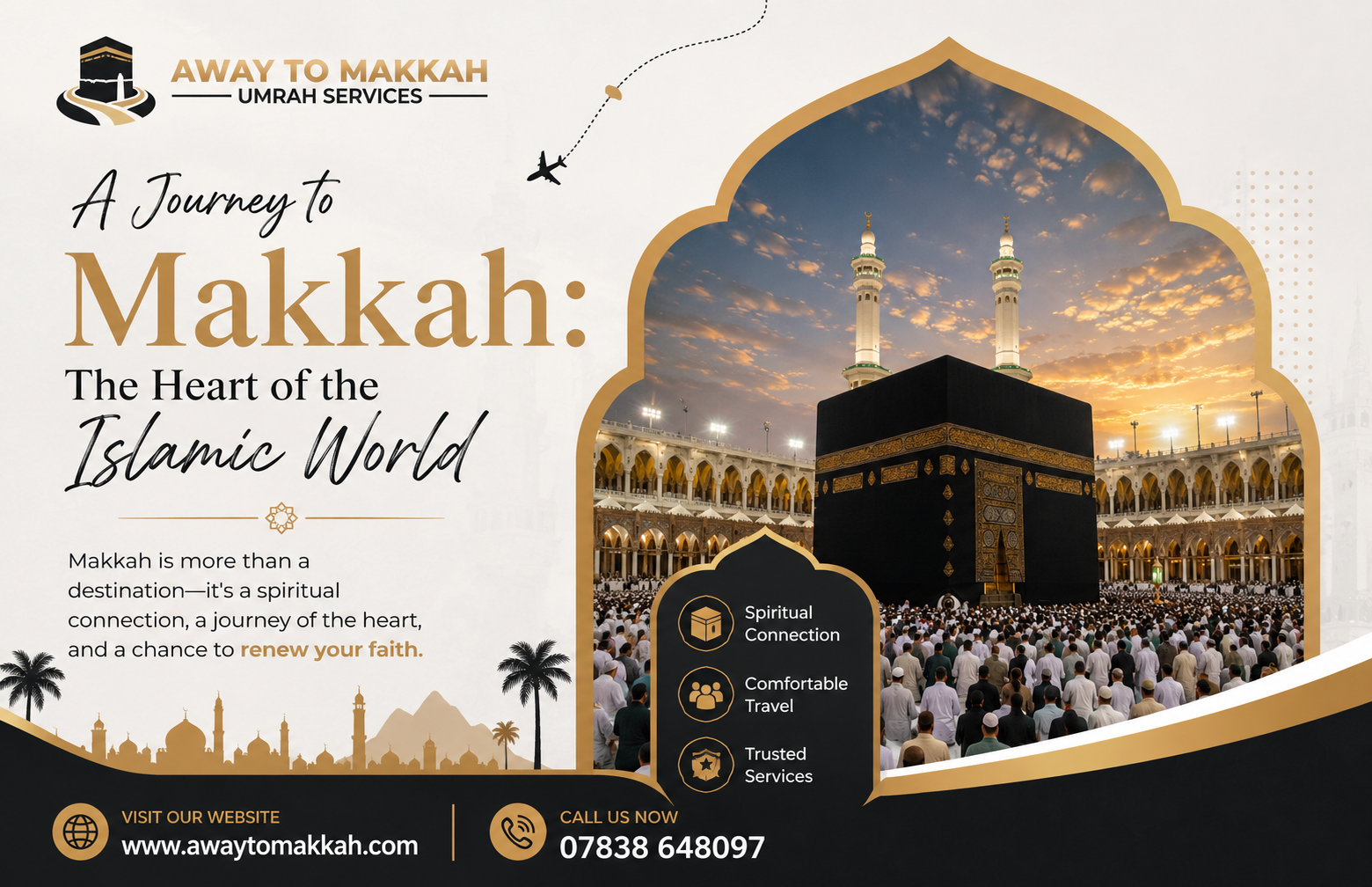
Few places on Earth hold the spiritual significance and emotional power of Makkah. Every year, millions of Muslims from every corner of the globe travel to this sacred city to perform Hajj and Umrah, seeking peace, forgiveness, and a deeper connection with faith. Beyond its religious importance, Makkah is also a city rich in history, culture, and transformation.
The Spiritual Center of Islam
At the heart of Makkah stands Masjid al-Haram, the largest mosque in the world and home to the revered Kaaba. Muslims around the world face the Kaaba during their daily prayers, making it the spiritual focal point of Islam.
Pilgrims performing Tawaf — the act of circling the Kaaba seven times — describe the experience as deeply emotional and life-changing. The atmosphere is filled with prayer, unity, and devotion, creating a feeling unlike anywhere else in the world.
A City Steeped in History
Makkah’s history stretches back thousands of years. It is the birthplace of Prophet Muhammad and the location where the Quran was first revealed. Many historical sites in and around the city connect visitors to key moments in Islamic history.
Among these sites are:
Jabal al-Nour — the mountain containing the Cave of Hira, where the first revelation took place.
Mount Arafat — an essential location during Hajj.
Mina — known for its vast tent city during pilgrimage season.
These places offer not only historical value but also moments for reflection and spiritual growth.
Modern Development Meets Sacred Tradition
Over the past few decades, Makkah has undergone rapid modernization to accommodate the growing number of pilgrims. Towering hotels, advanced transportation systems, and expanded prayer areas now surround the holy sites.
One of the most recognizable landmarks is Abraj Al Bait Towers, a massive clock tower complex overlooking Masjid al-Haram. The development symbolizes how Makkah balances preserving sacred traditions while embracing modern infrastructure.
Despite these changes, the city’s spiritual essence remains untouched. Whether walking through busy streets filled with pilgrims or hearing the Adhan echo across the mountains, visitors feel connected to centuries of faith and devotion.
The Experience of Hajj and Umrah
For Muslims, visiting Makkah is often the journey of a lifetime. Hajj, one of the Five Pillars of Islam, is required once in a lifetime for those physically and financially able. Umrah, while not obligatory, can be performed any time of the year.
The experience teaches patience, humility, and equality. People from different cultures, languages, and backgrounds stand side by side in worship, united by faith.
Final Thoughts
Makkah is more than a destination — it is a symbol of unity, spirituality, and history. For millions, it represents a place where prayers feel closer, hearts feel lighter, and faith becomes stronger.
Whether viewed through its sacred landmarks, historical significance, or the personal experiences of pilgrims, Makkah continues to inspire and transform lives across generations.